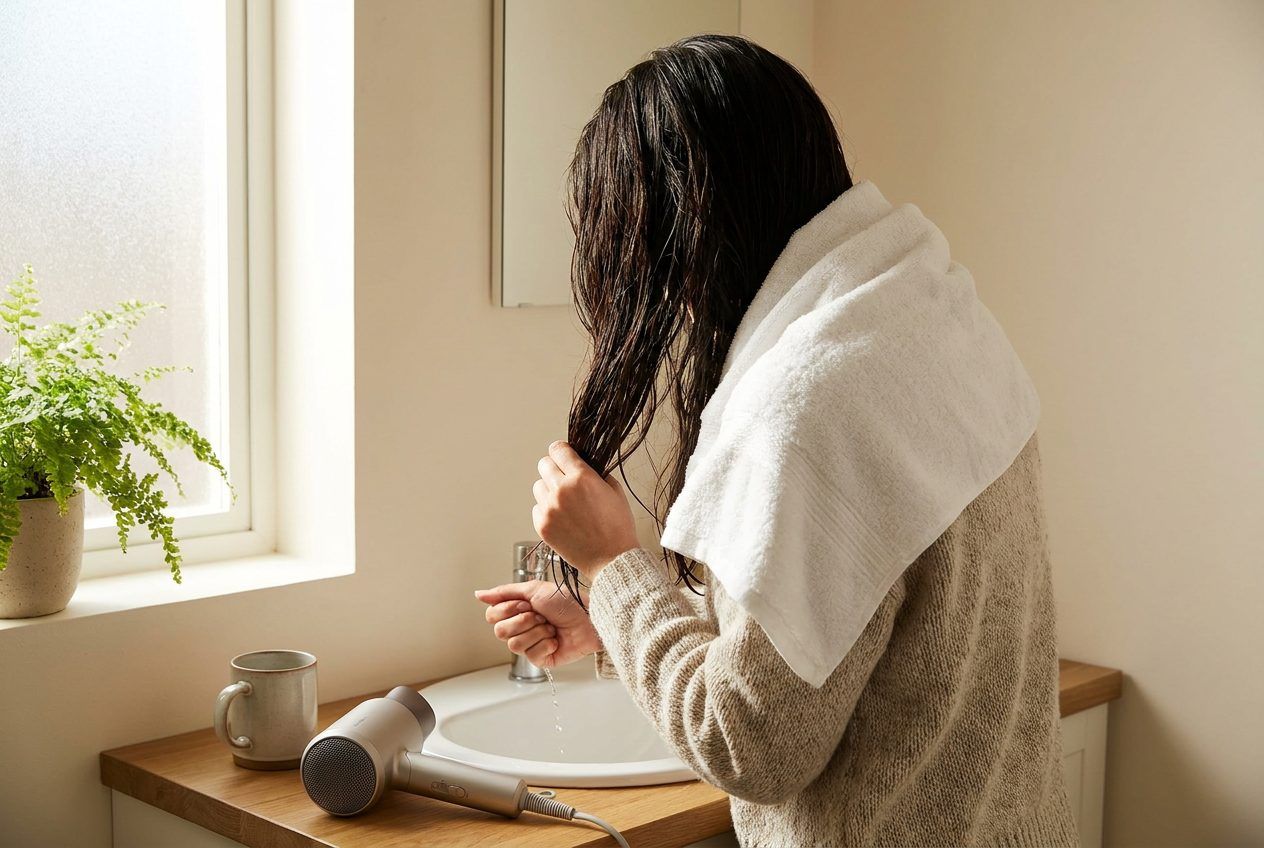
Hair health
Stress, sleep, washing and heat
The habits that matter are the unfashionable ones: less tension, a calm scalp, and a life that is not a permanent emergency.
Written in the UK, for women and men.
The NHS lists stress and illness among causes of temporary hair loss. It does not set a number of hours of sleep that regrows hair. Dandruff is not caused by washing too little. Repeated tension from tight styles can cause traction alopecia. Heat and bleach damage the fibre you already grew.
See a GP if hair loss is sudden, patchy, or comes with illness, a rash, or other symptoms. The NHS asks for that conversation before a private clinic.
Scalp care is not a ten-step routine. It is avoiding the things that break hair or inflame skin, and recognising when a shed is your whole body talking.
Stress and sleep
The NHS lists stress and illness as causes of temporary hair loss, alongside cancer treatment, weight loss and iron deficiency. The mechanism is telogen effluvium: more hairs rest, then fall. The British Association of Dermatologists names stress and major body changes in the same breath. Sorting the stress is worth doing for its own sake. It is not a branded serum.
Sleep is in the same ordinary category. Poor sleep and chronic stress travel together. There isn’t a result that says eight hours regrows a hairline. If you are not sleeping and your hair is falling, tell a GP. Thyroid disease, depression and iron deficiency all disturb both.
Washing
Dandruff is not caused by being dirty. It may be more obvious if you wash rarely. An anti-dandruff shampoo with ketoconazole, coal tar or salicylic acid is the NHS suggestion, used for up to four weeks. There is no universal “every other day” rule on that page. Oily scalps and dry scalps are not the same head.
Heat, colour and tension
Straighteners, very hot dryers and overlapping bleach make the hair shaft brittle, so it snaps. That looks like loss and is often breakage. Leave lengths alone while you work out whether the follicle is the problem.
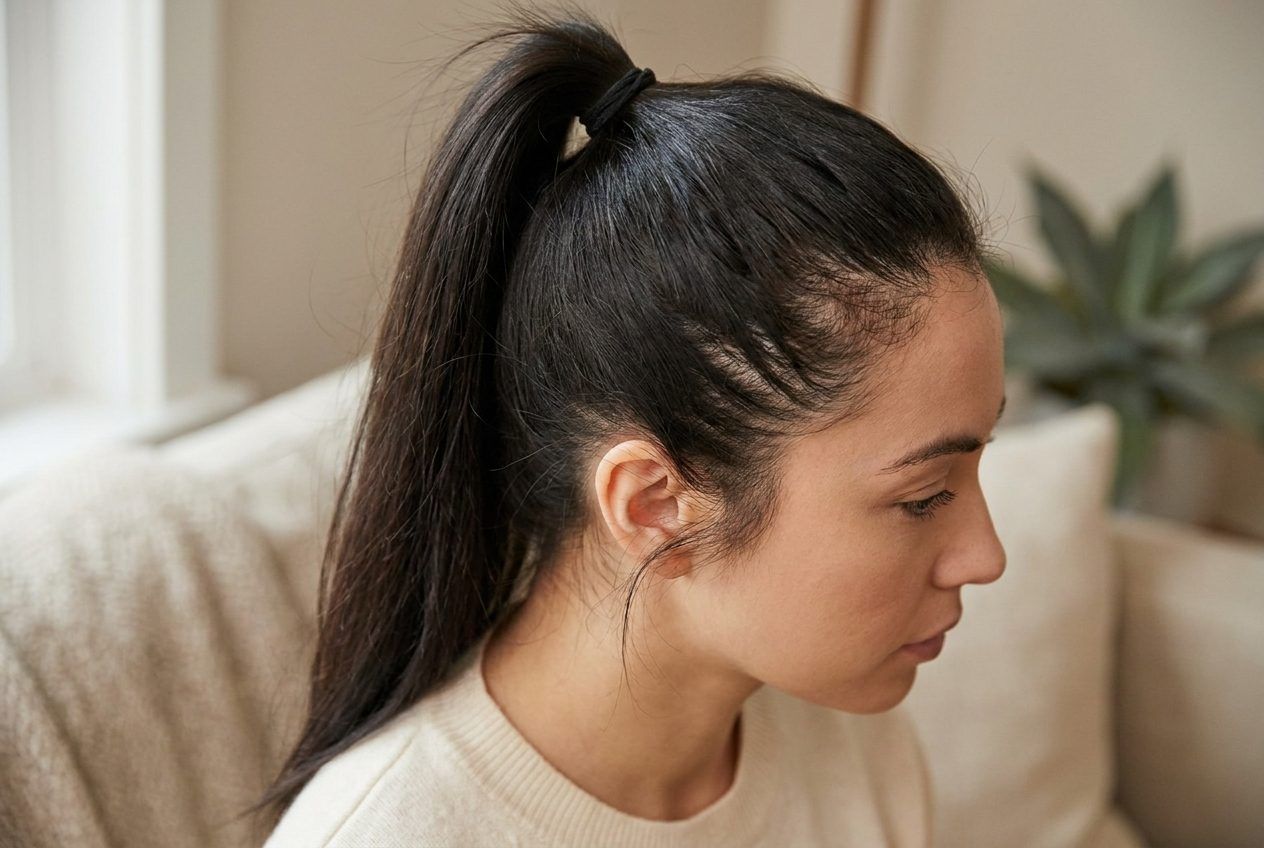
Traction is different. Tight ponytails, braids, weaves and extensions pull on the same follicles for months. The hairline thins where the tension sits. Loosen the style. If the skin is sore, stop. The longer note is on the causes page for traction and dandruff.
None of this replaces minoxidil for pattern loss, or a GP for patches.
Common questions
Can stress make your hair fall out?
Yes. The NHS includes stress among the causes of temporary hair loss. The shed is a telogen effluvium, often weeks after the stressful period, not the same day.
How often should I wash my hair?
The NHS does not set one schedule. Dandruff is not caused by poor hygiene, though it shows more if you wash rarely. Wash often enough that your scalp is comfortable.
Does sleep grow hair?
Sleep is part of general health. There isn’t a trial that says a set number of hours regrows pattern hair.
Sources
Keep reading
-
-
-

-