Causes
Thyroid, PCOS, traction and dandruff
Four problems that get blamed on ‘stress’ or ‘products’. Each has a more precise NHS description.
Written in the UK, for women and men.
An underactive thyroid can cause dry hair or hair loss, and it is treated with levothyroxine. PCOS (polycystic ovary syndrome) includes hair loss as a symptom. Traction alopecia comes from repeated pulling. Dandruff is flakes and itch, treated with medicated shampoo, and it is not the same as patchy baldness.
See a GP if hair loss is sudden, patchy, or comes with illness, a rash, or other symptoms. The NHS asks for that conversation before a private clinic.
On this page
On this page
These are the “could it be medical?” questions that are not pattern baldness and not a simple shed.
Thyroid
An underactive thyroid does not make enough hormone. Symptoms include extreme tiredness, feeling cold, weight gain, constipation, low mood, dry skin, dry hair or hair loss, and a hoarse voice. See a GP. Blood tests look at TSH and thyroxine. Treatment is usually levothyroxine, often for life, with repeat bloods so the dose is right. The main UK cause is Hashimoto’s disease. In pregnancy the dose often needs to change. Hair products do not replace the tablet.
PCOS
The NHS page on polycystic ovary syndrome (PCOS) lists irregular periods, excess facial or body hair, hair loss on the scalp, weight change, and difficulty getting pregnant. There is no cure. Medicines sometimes used include the contraceptive pill for periods, and spironolactone or eflornithine for excess face and body hair. That last point is not a routine prescription for a widening parting. A GP can arrange hormone tests and, if you are over 18, an ultrasound.
After COVID or another illness
The NHS hair-loss page lists illness as a cause of temporary loss. A febrile illness, including COVID, can be followed by telogen effluvium. There is no separate “COVID baldness” diagnosis on that page. Read telogen effluvium and see a GP if the shed comes with ongoing illness.
Traction
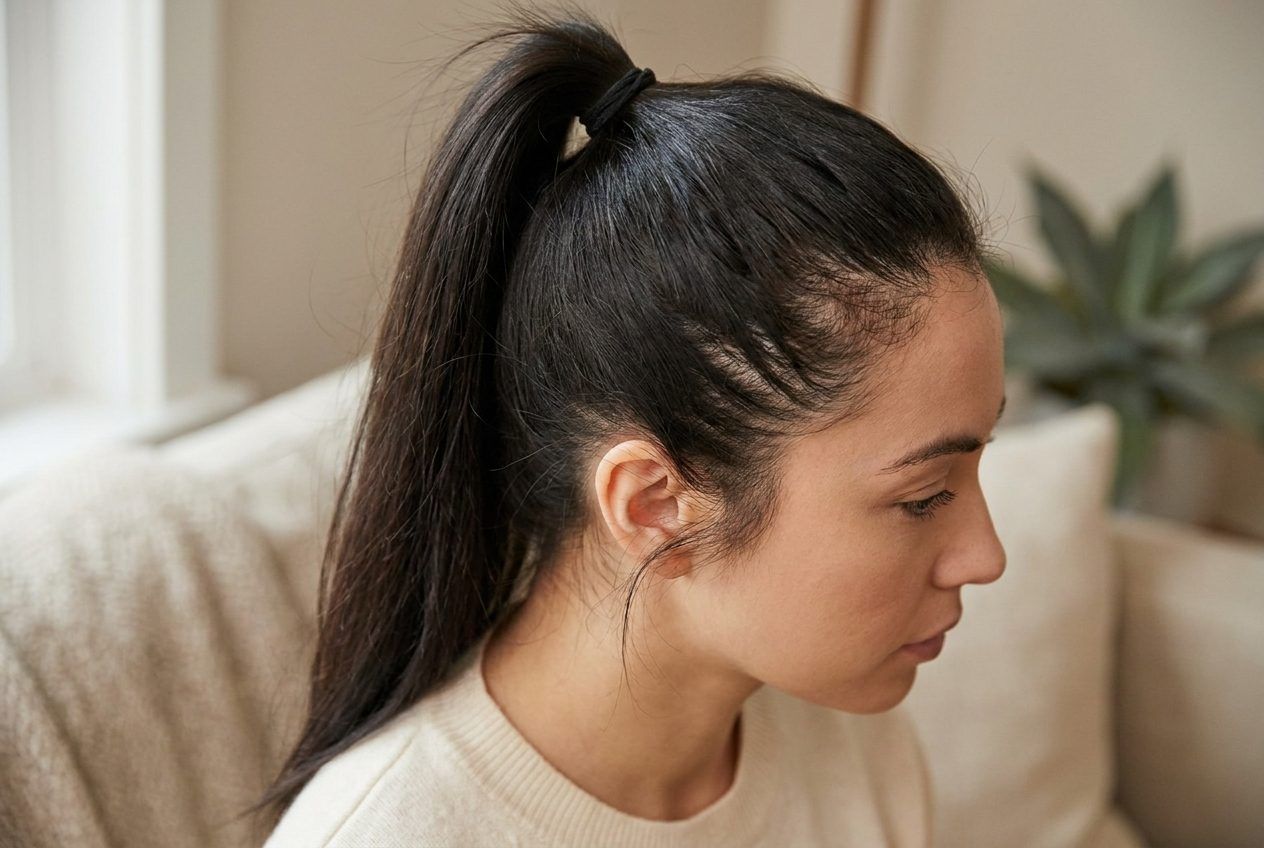
Hair that is pulled, day after day, gives up at the edge. Loosen braids, ponytails and extensions. Give the hairline a rest. Pain, pustules or a shiny scar need a GP, because scarring does not grow back the way a shed does.
Dandruff and seborrhoeic dermatitis
Dandruff is common, not contagious, and not a moral failing. Ketoconazole, coal tar or salicylic acid shampoos are the NHS options. A rash with silvery scale can be psoriasis. A bald patch with a red or silver rash can be ringworm. Those are GP appointments. The shampoo page is best shampoo for hair loss, and it refuses to call a wash a cure.
Common questions
Can an underactive thyroid cause hair loss?
Yes. The NHS includes dry hair or hair loss among the symptoms, with tiredness, feeling cold and weight gain. Treatment is usually levothyroxine, monitored with blood tests.
Does PCOS cause hair loss?
Polycystic ovary syndrome (PCOS) includes hair loss as one of the main symptoms, alongside irregular periods and excess hair growth on the face and body.
What is traction alopecia?
Hair loss from repeated pulling: tight braids, ponytails, weaves or extensions. Loosen the style. If the scalp is scarred or sore, see a GP.
Sources
Keep reading
-
-
-

-