Causes
Causes and conditions
The pattern tells you which page to read. The GP tells you if you have guessed wrong.
Written in the UK, for women and men.
Hair loss has different causes. Male and female pattern loss are common and usually permanent without treatment. Telogen effluvium is a shed after illness, stress or a body change. Alopecia areata is patchy and needs a clinician. Iron deficiency and thyroid disease are blood-test questions.
See a GP if hair loss is sudden, patchy, or comes with illness, a rash, or other symptoms. The NHS asks for that conversation before a private clinic.
Name the pattern before you name the product.
Which description fits?
| What you notice | Often discussed as |
|---|---|
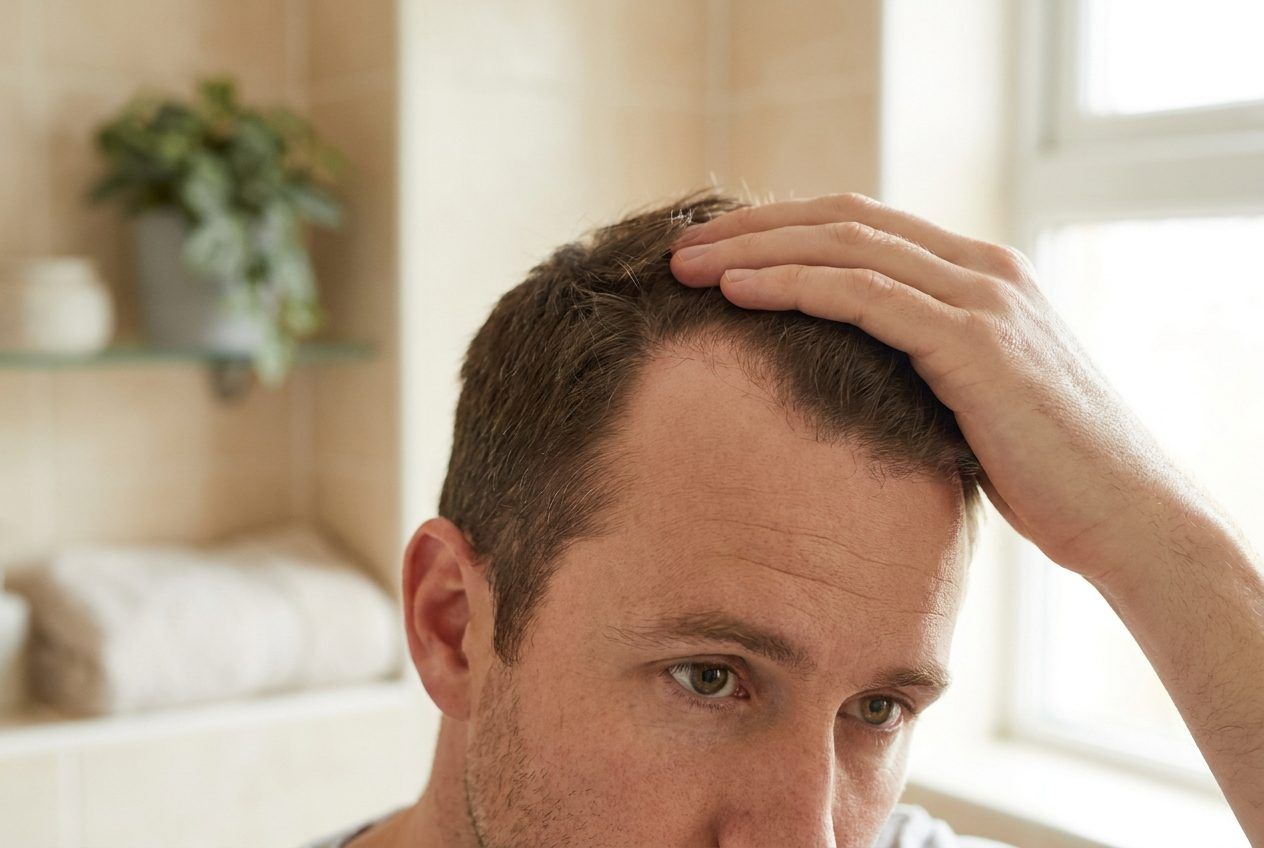
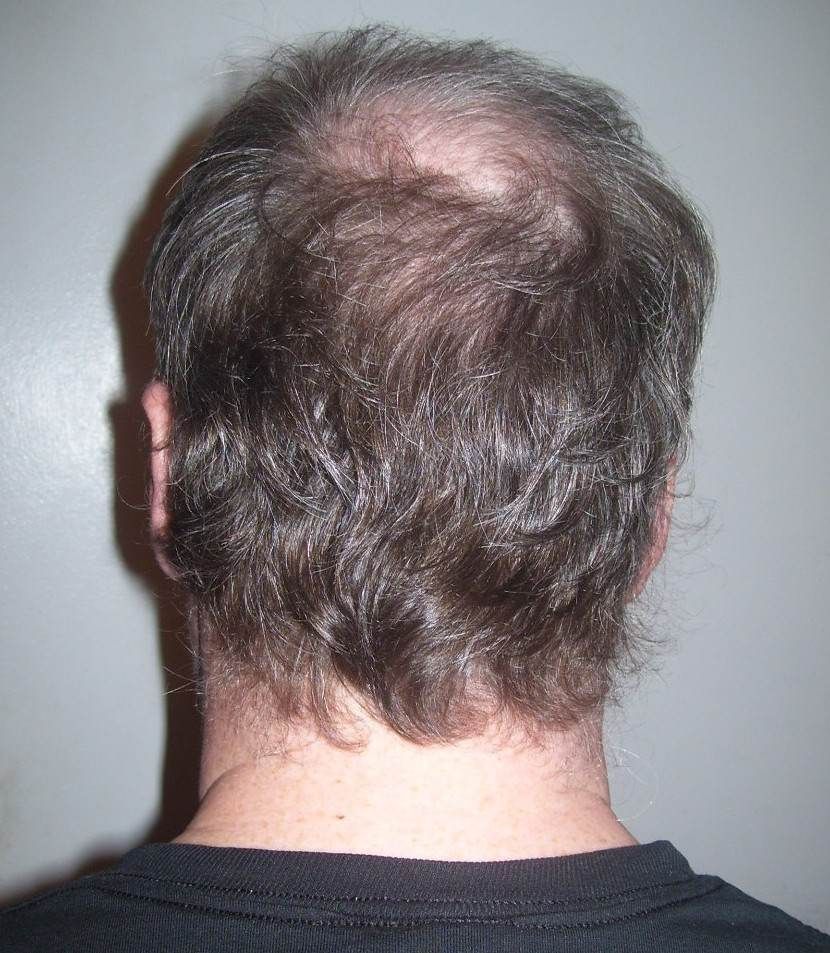
| Receding front, thinning crown, family history | Male pattern hair loss |
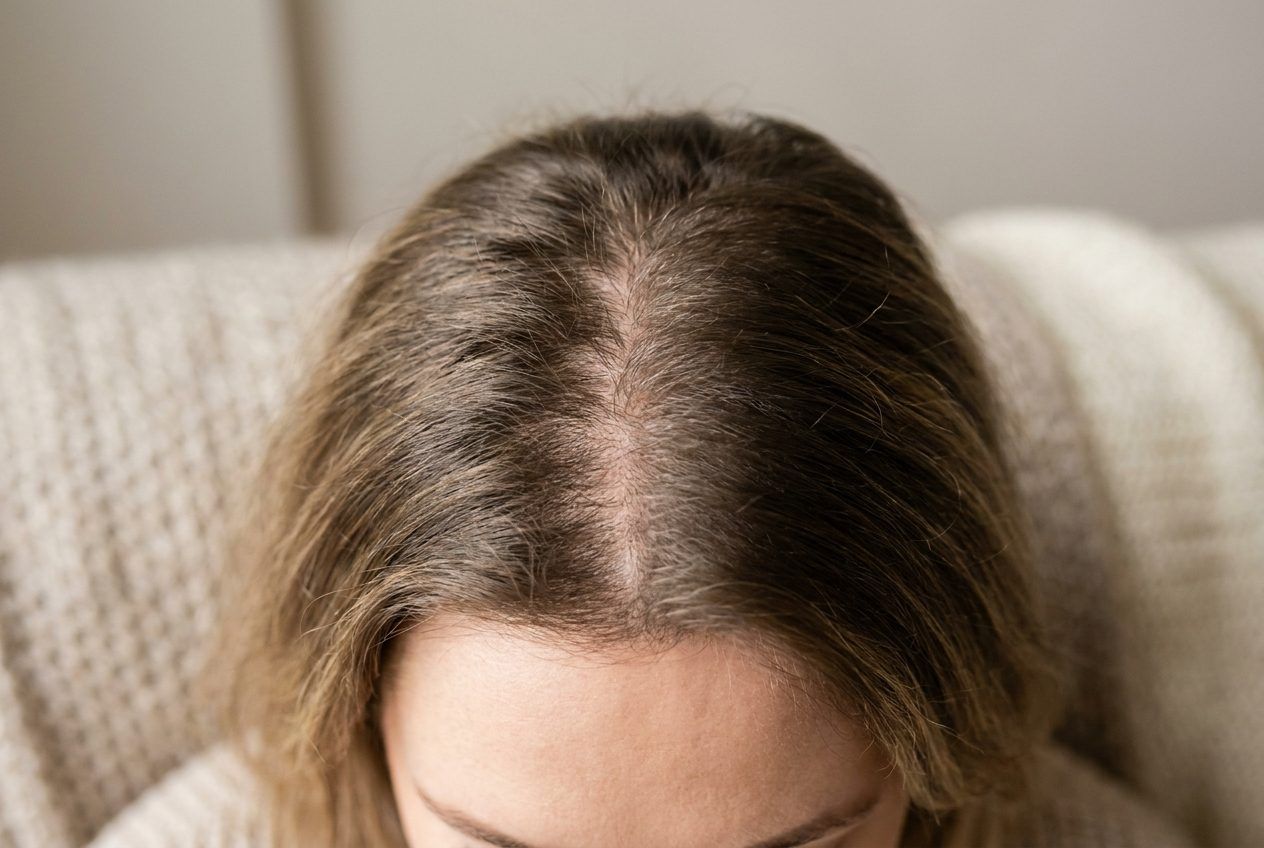
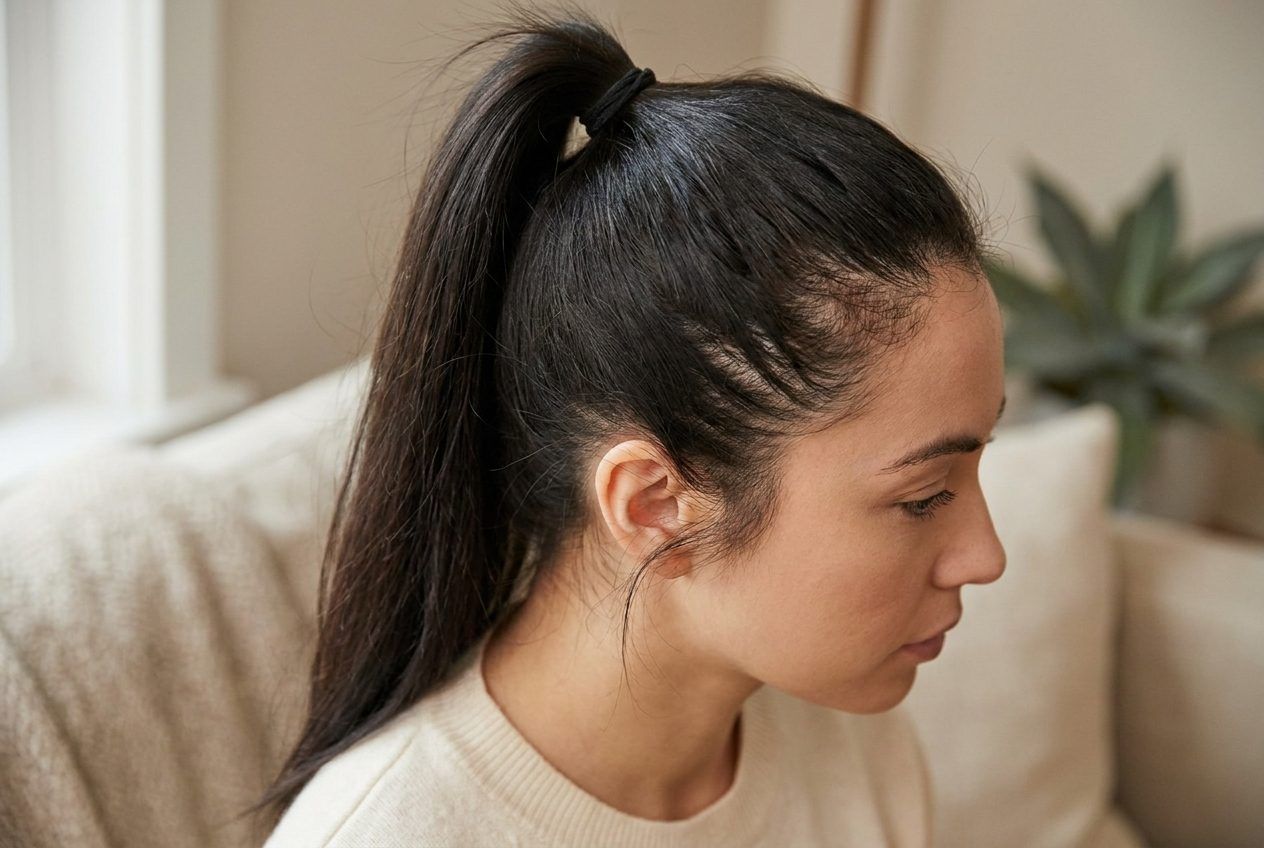
| Widening parting, thinner crown, hairline stays | Female pattern hair loss |
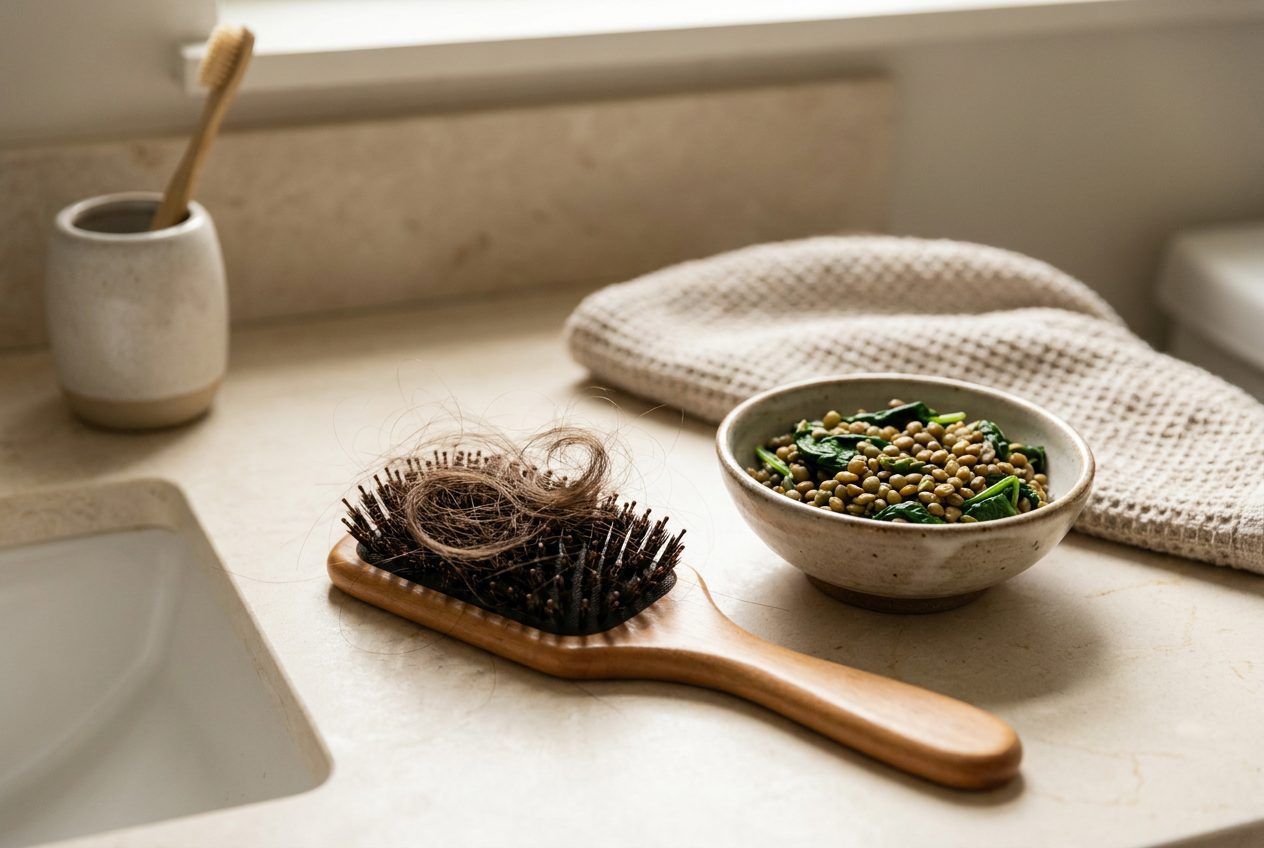
| A lot of hair in the brush after illness, stress or a body change | Telogen effluvium |
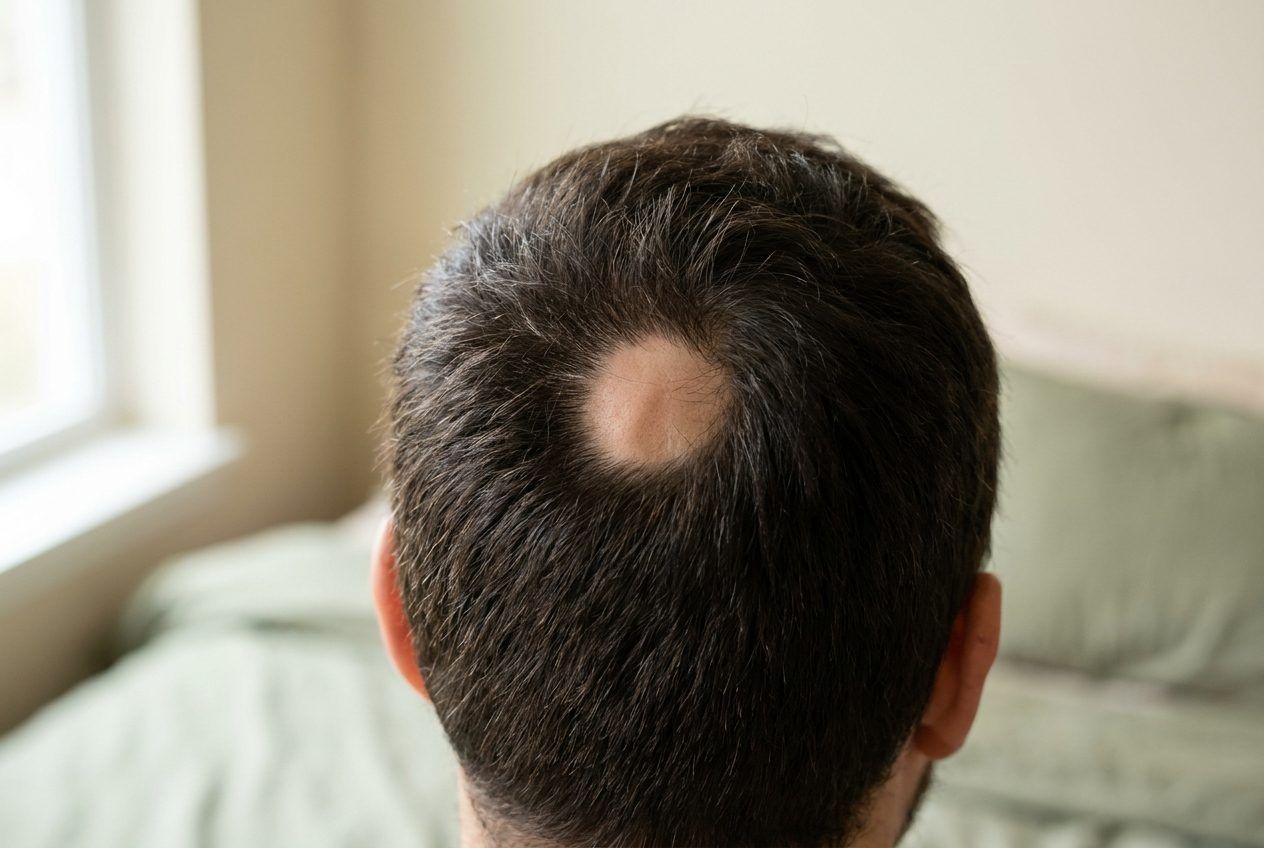
| Smooth coin-shaped patches | Alopecia areata |
| Shed in the months after a baby | A postpartum telogen effluvium |
| Change around menopause | Needs a GP to separate pattern loss from other causes |
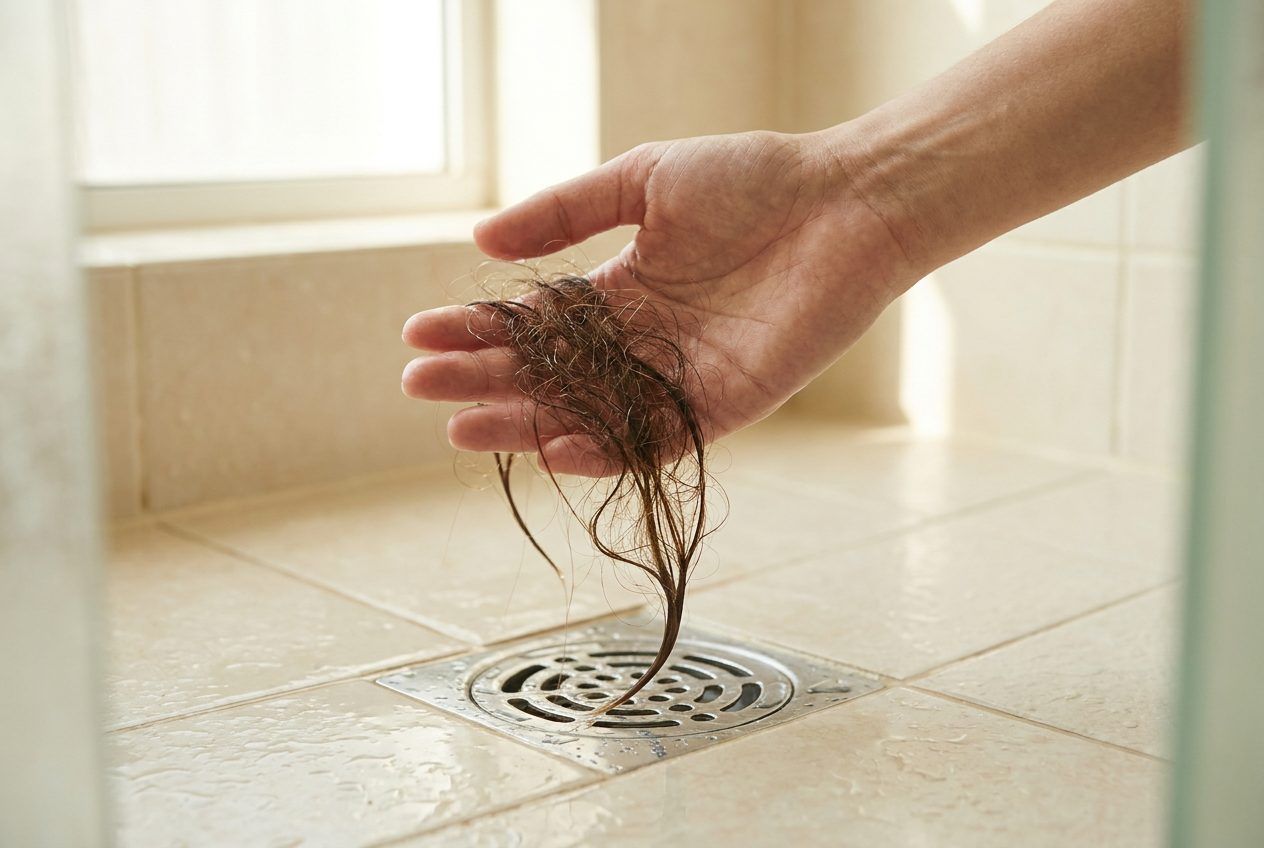
| Tiredness plus more hair in the plughole | Possible iron deficiency or thyroid disease |
| Tight braids, ponytails or extensions | Traction |
| Flakes and itch | Dandruff or seborrhoeic dermatitis |
Women and men collect the pages that are most often the way in. Neither list is closed. Iron deficiency and alopecia areata happen to both.
In this section
-
-
-

-

-
-
-
-
Common questions
When is hair loss not just genetic?
When it is sudden, patchy, or comes with tiredness, weight change, a rash, or a recent illness or birth. Those are GP appointments.
Is female pattern hair loss the same as male pattern?
Both are pattern loss, but the look differs. Women more often keep the frontal hairline and widen the parting. NICE prefers the name female pattern hair loss because the hormone story is less clear.
Can dandruff cause bald patches?
Ordinary dandruff is flakes and itch. The NHS says a red or silver rash with patchy hair loss can be ringworm, which is a GP problem, not a cosmetic one.