Causes
Menopause and hair loss
The age fits two stories at once: menopause, and female pattern hair loss. They are not automatically the same thing.
Written in the UK, for women and men.
Menopause is when periods change and stop because hormone levels fall, usually between 45 and 55, and it can be earlier. Hair thinning at the same age is often female pattern hair loss, which widens the parting. The NHS does not describe hormone therapy on its hair-loss page as a hair-regrowth treatment. A GP can sort out which problem you have.
See a GP if hair loss is sudden, patchy, or comes with illness, a rash, or other symptoms. The NHS asks for that conversation before a private clinic.
Menopause is a natural change. Periods change and then stop because hormone levels fall. It usually affects women between 45 and 55, it can happen earlier, and it affects anyone who has periods. Perimenopause is the run-up.
Why does hair come into it?
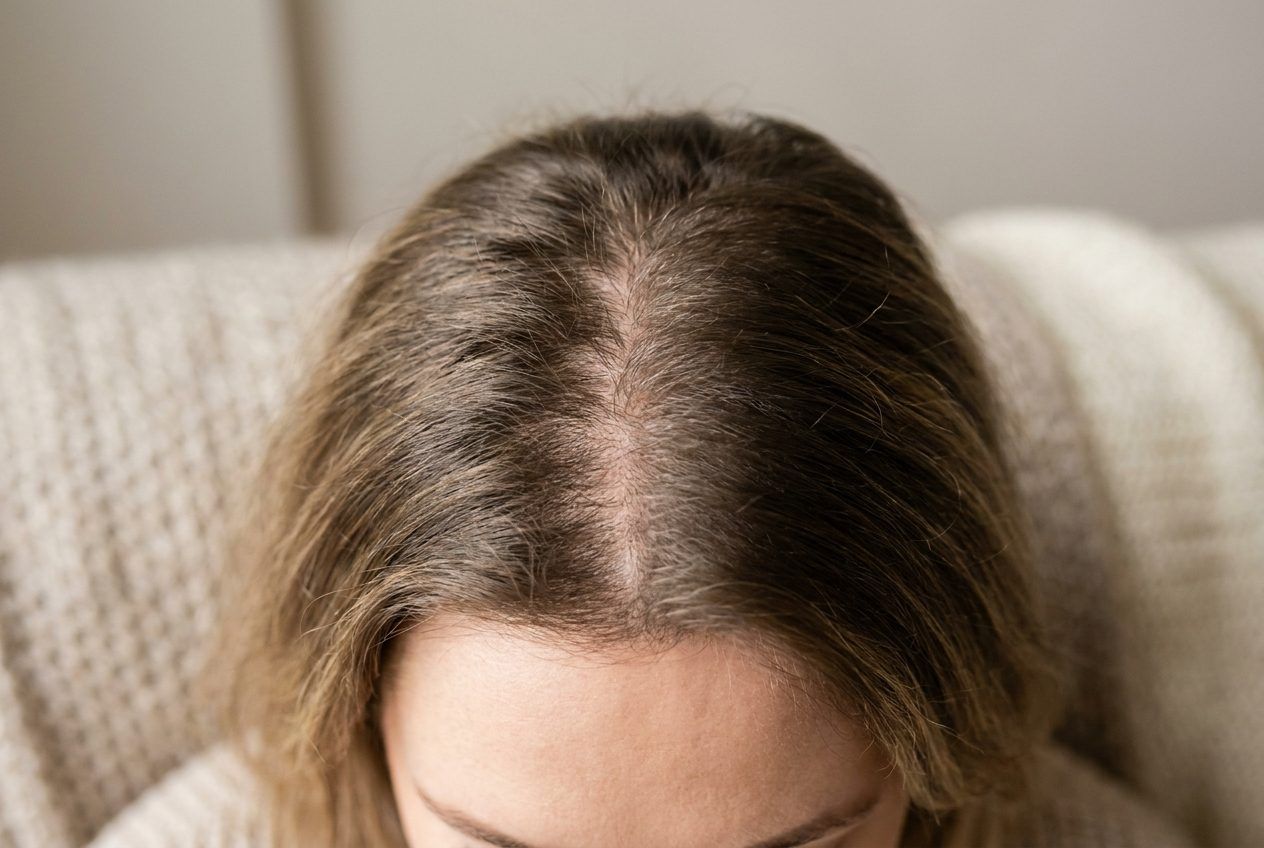
Those are the same years in which female pattern hair loss often shows. NICE describes that pattern as less density on the crown and front, a wider central parting, and a frontal hairline that stays. The androgen story is less tidy than in men, so the female name is preferred.
A shed can also be telogen effluvium if you have been ill, stressed, or losing weight. Iron deficiency and an underactive thyroid remain on the list, and both are blood tests. Do not let “it’s just menopause” close that list.
What can you actually do?
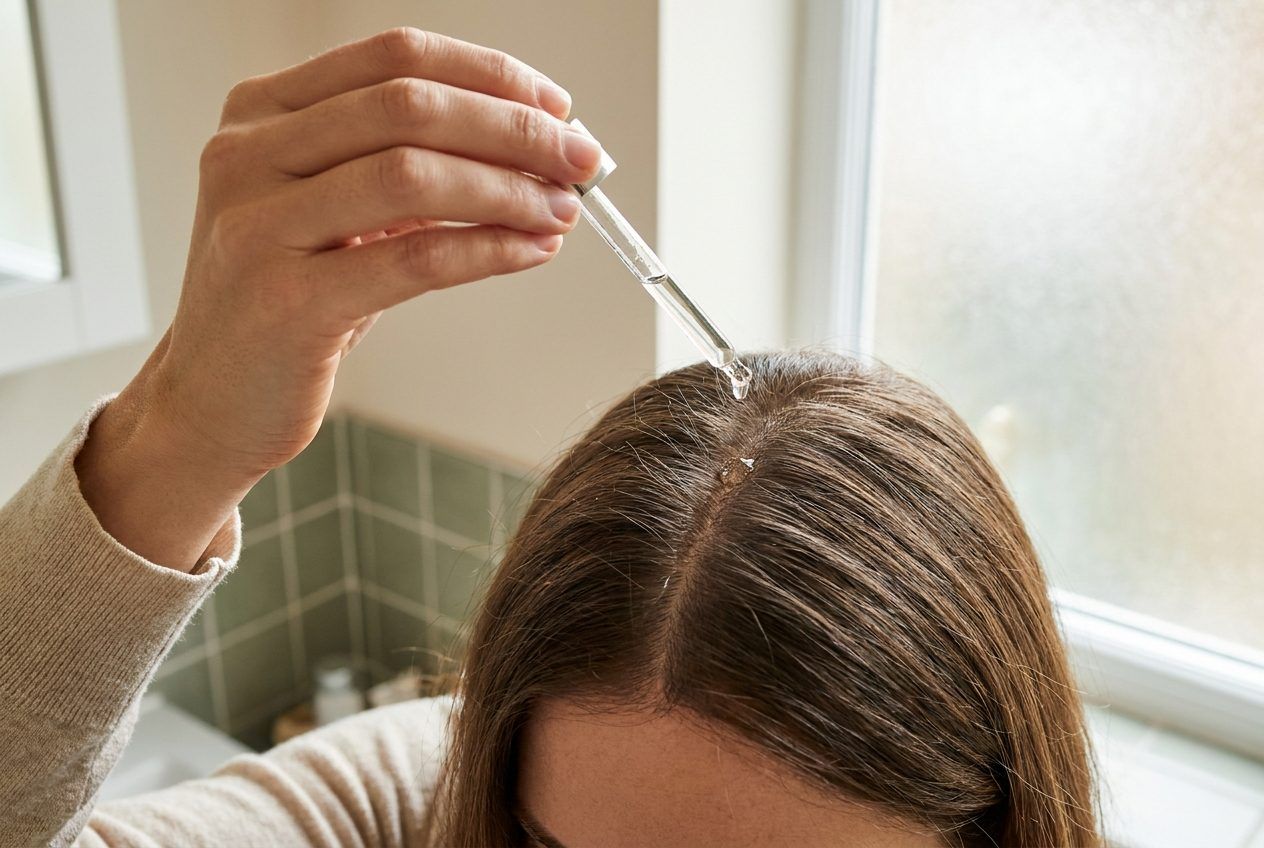
For female pattern loss, the NHS names minoxidil. It does not work for everyone and it only works while you use it. Women should not use finasteride. The longer page is does minoxidil work.
Menopause symptoms themselves, from periods to sleep, belong with a GP. A hormone dose is a GP decision. HRT is not described as a hair-regrowth treatment on the NHS pages used here.
Scalp care and food still matter in the ordinary sense. They are in hair health. They do not replace the pattern-loss decision.
Common questions
Does menopause cause hair loss?
Hair often changes around the same years as menopause. Female pattern hair loss is common then. A GP should check for other causes, including iron deficiency and thyroid disease, rather than assuming it is only hormones.
What treatment does the NHS name for women?
Minoxidil for female pattern baldness. Women should not use finasteride. Menopause care itself is a separate GP conversation.
Will HRT grow my hair back?
The NHS menopause and hair-loss pages do not make hair regrowth a reason to start hormone therapy.
Sources
Keep reading
-
-
-
-